
What should your puppy learn beyond ‘sit’ and ‘stay’?
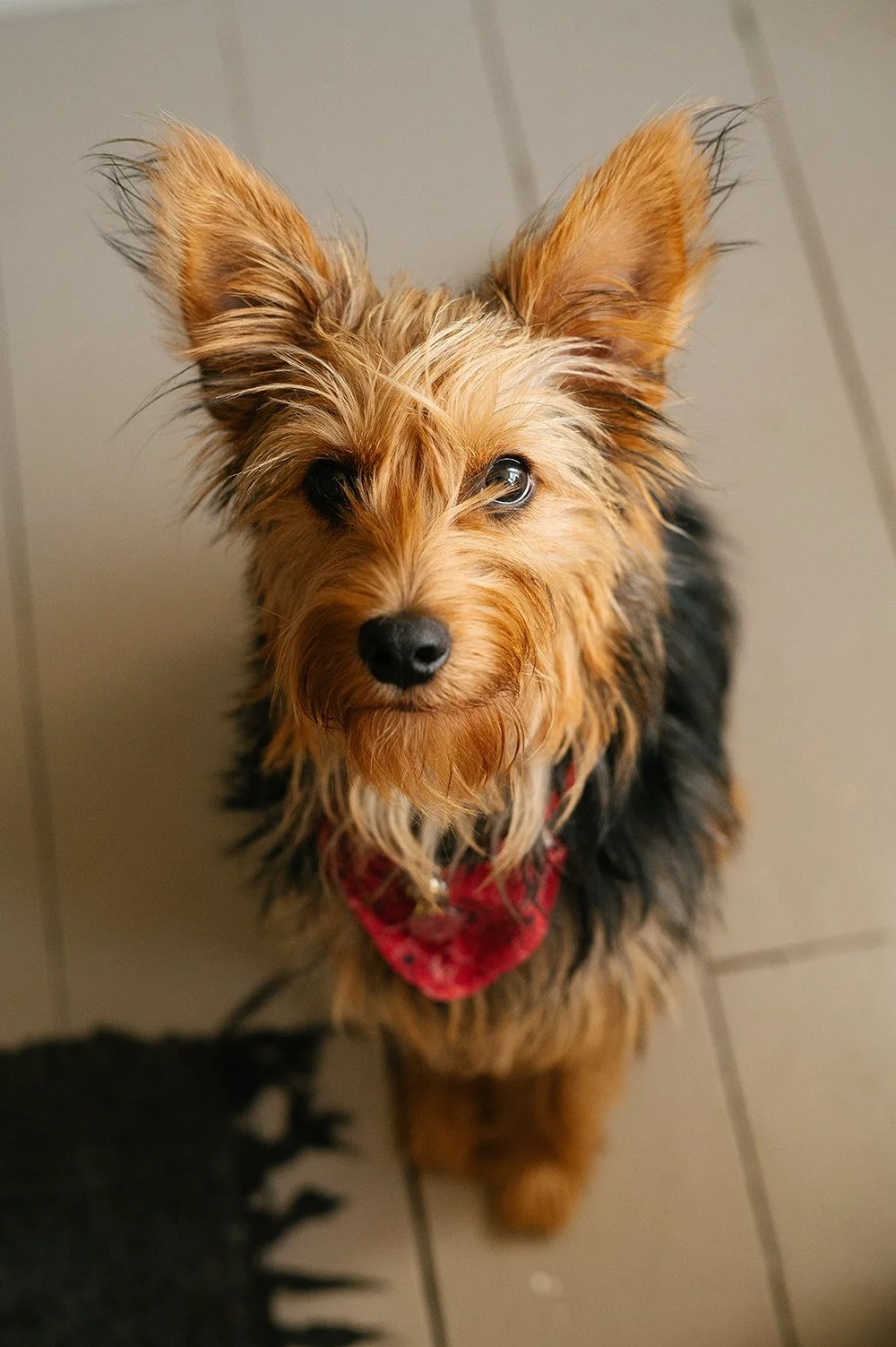
When you bring a puppy home, there can be a lot of pressure to teach them everything.
Sit. Stay. Down. Paw. Recall. Walking nicely on a lead... And yes, these things are useful. But if you ask me what I'd really like a puppy to learn in those first few months, my answer is slightly different.
I'd like them to learn how to be comfortable, content and at ease with the world around them.
Because having a dog who can sit beautifully on cue is one thing. Having a dog who can calmly walk past another dog, settle while you're having a coffee, cope with something unexpected or feel comfortable in a new environment is something else entirely.
And that's where I think good puppy training can make such a difference.
Puppy training isn't just about obedience
Obedience has its place, of course. Teaching your puppy how to respond to you is an important part of building communication and reliability. But I don't think puppy training should stop there.
Those early months are a brilliant opportunity to teach puppies that the world is a safe and interesting place, while also showing them that they don't need to interact or get overly excited with absolutely everything around them.
That might mean learning to watch another dog without needing to go over and say hello. Learning that people can walk past without needing to greet them. Learning that sometimes we settle and switch off. Learning how to focus on you when there are distractions around. These are the foundations that become really useful as your puppy grows up.
Learning to switch off is a skill
This is something I particularly like to work on in puppy training.
Puppies are exciting. Everything is new. And most of the 1-2-1s I do tend to have a common overriding theme - ‘how can I get my puppy to calm down?’!
So being able to switch off is just as important as being able to engage.
A puppy who learns that they can settle in different environments is developing a really useful life skill. It can make things like visiting the pub, sitting in a café, travelling somewhere new or simply having people over at home much easier as they get older.
Your puppy doesn't need to say hello to everyone
One of the biggest misconceptions I see around puppy socialisation is that more interaction must always be better. It isn't.
Socialisation is about helping a puppy have positive experiences with the world around them. It doesn't mean they need to meet every dog and every person they see. In fact, constantly expecting to greet everything can sometimes create a puppy who becomes frustrated when they can't.
I'd much rather teach a puppy that they can calmly observe what's happening around them and feel comfortable without always being involved. That's a really important foundation for the adult dog they're going to become.
Confidence doesn't mean being fearless
Another thing I want puppies to develop is confidence.
But confidence isn't about having a dog who charges into every new situation without hesitation. A confident dog can experience something unfamiliar, take a moment, process it and then move on.
That's why I like to give puppies the opportunity to experience different environments, sounds, people, dogs and situations at a pace they can cope with. We're not trying to overwhelm them. We're helping them learn.
What I want puppies to leave my classes with
When I run puppy classes, I'm not aiming for six puppies who can all perform the same behaviours perfectly. I'm much more interested in helping each puppy and their guardian understand one another.
By the end of the course, I want owners to have a better understanding of:
How their puppy communicates
How to build confidence
How to encourage calm behaviour
How to help their puppy settle
How to manage distractions
How to build focus and engagement
How to introduce new experiences thoughtfully
How to continue developing these skills as their puppy grows
Raising a calm and confident dog
This is really what my puppy classes are about. Not creating the "perfect" puppy. Not ticking off a list of obedience behaviours. And definitely not expecting every puppy to learn in exactly the same way. It's about giving puppies the best possible start and helping their guardians understand how to support them as they grow.
My next 6-week puppy training course in Tooting, South London, starts on 5th September.
Classes are deliberately kept small, with a maximum of six puppies, so I can give individual guidance and make sure the environment stays calm and supportive.
If you're looking for puppy classes that focus on more than obedience, I'd love to help.
Find out more about my puppy classes →
Related reading: Dog training in London: a calm, modern approach to training your dog